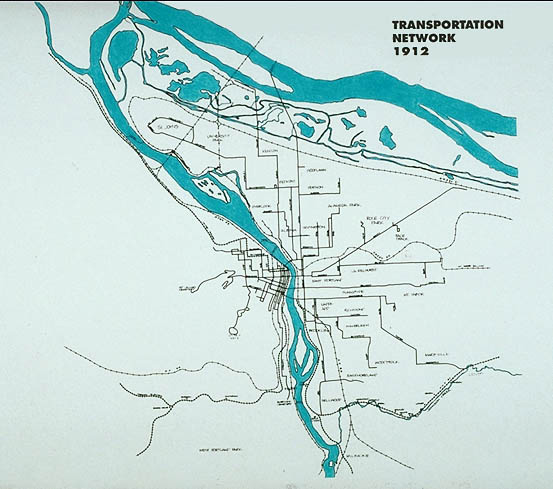
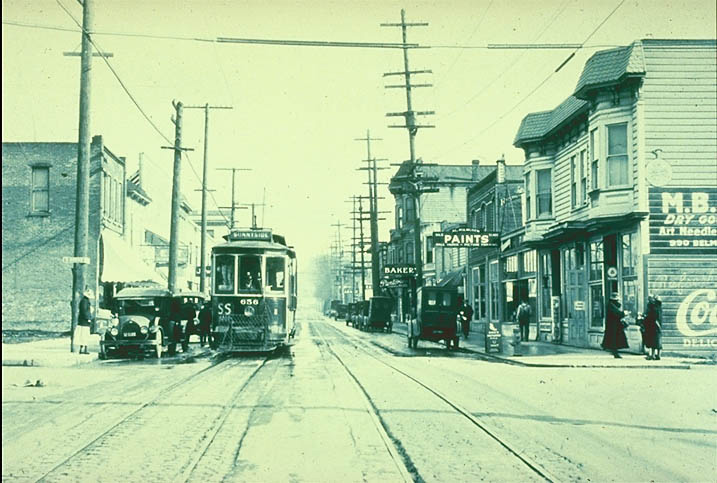
While Oregon lore is full of stories about the defeat of the Mt. Hood Freeway, you don't hear quite as much about the building of Interstate 5. And with the Interstate Bridge taking center stage in the news lately, now is a good time to think about the entire I-5 corridor and how it has impacted Portland and its neighborhoods.
Following the same pattern of development as many other U.S. cities, the interstate in Portland cut through a predominantly African-American neighborhood, essentially bisecting the community and dislocating many residents. While this was the mold used in U.S. cities, other countries did not run their major freeways through densely populated areas. For example, in the March 2001 Journal of Urban History, in an article titled "The History of American Cities and Suburbs," Lionel Frost writes,
In the 1950s, when American cities were building freeways lavishly, Toronto built a subway system. The freeways that were built there stopped short of entering the inner neighborhoods. There are several reasons why these cities developed as they did: they did not have access to federal funding for freeway building; in Australia, gasoline taxes are much higher. A more fundamental explanation for this distinctiveness lies in the choices that cities made at crucial stages in their histories, which took them along different paths and created conditions that shaped future decision making.Did American cities have the same discretion that these Canadian and Austrailian cities had in federal transportation planning? From my understanding, the first American city to fight against a federal project was Boston in the late 1960s, where city officials and citizens oppossed the Inner Belt expansion project. Was it the experience of the earlier built interstates that gave the people of Boston (and later Portland, with the Mt. Hood Freeway) the ability to fight against new freeway projects? Did anyone fight against I-5's construction here in Portland?
Regarless of who ultimately controlled the decision making process, I am interested in the main actors here in Portland and on the state and federal levels that made I-5 a reality. How did the decision making take place? Who was included in that process? Were there any local, state, or federal politicians involved, or was this simply a project designed by engineers that met no resistance from elected officials?